Printable Gettysburg Address
Printable Gettysburg Address - President abraham lincoln wrote these remarks for the dedication of the soldiers national cemetery on november 19, 1863. See the full description below. On march 4th, 1865, lincoln gave a second speech titled the second inaugural address. The battle of gettysburg began on july 1, 1863 and ended two days later with the climactic “pickett’s charge.” more than 150,000 union and confederate soldiers were drawn into the battle. Leeõs confederate army retreated on july 4th 1863. The battle of gettysburg was fought between july 1 and july 3, 1863. President abraham lincoln delivered during the american civil war at the dedication of the soldiers' national cemetery, now known as gettysburg national cemetery, in gettysburg, pennsylvania on the afternoon of november 19, 1863, four and a half months after the union armies defeated confederate forces in the battle. Four score and seven years ago our fathers brought forth on this continent, a new nation, conceived in liberty, and dedicated to the proposition that all men are created equal. Subscribe today to access hundreds of premium teaching resources and lesson plans! Gettysburg address digital history id 4014.

Lincoln's Gettysburg Address another free printable from www.flandersfamily.info Make Free
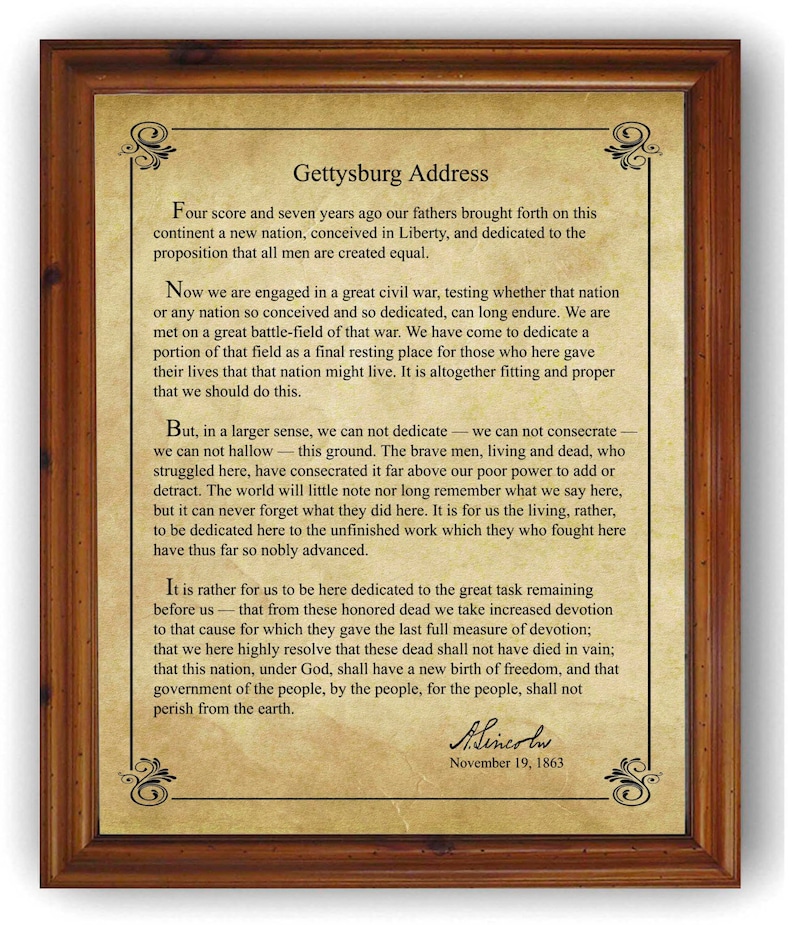
Gettysburg Address by Abraham Lincoln 16x20 Print does Not Etsy
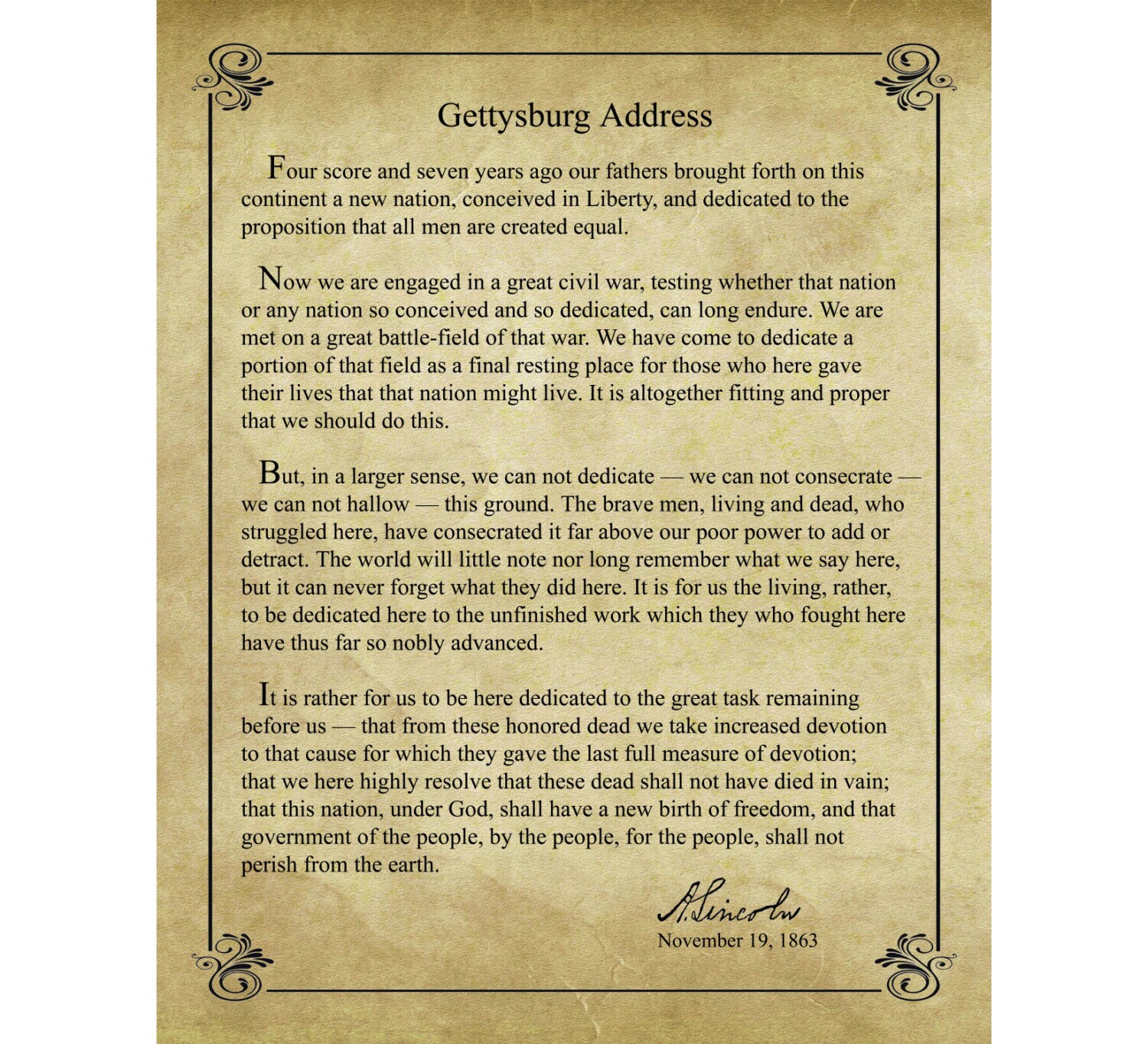
Gettysburg Address by Abraham Lincoln 16x20 print

The Gettysburg Address Print Abraham Lincoln Speech American History Poster 03 Digital Art

Gettysburg Address Framed Print by Granger

to OurDocuments.gov

Gettysburg Address Drawing by Granger Fine Art America

Gettysburg Address print Gettysburg address, Gettysburg, Lincoln life

Gettysburg Address Art Print Historical Abraham Lincoln Gettysburg Address Document Poster

Abraham Lincoln Gettysburg Address Print Famous Speeches
Noted For Its Beautiful And Compelling Language, Abraham Lincoln’s Gettysburg Address Was Also Unique For Its Brevity — Just Over 270 Words.
The gettysburg address is a speech that u.s. Discover the meaning and purpose of the gettysburg address delivered by president abraham lincoln. See the full description below. The gettysburg address was delivered on november 19, 1863, several months after the union defeated the confederacy at the battle of gettysburg.
The Abraham Lincoln Papers At The Library Of Congress, Manuscript Division (Washington, D.
The battle was not only a major turning point in favor of the union army but was also the largest and most devastating of the war, with total casualties numbering over 50,000. Abraham lincoln, “gettysburg address” (19 november 1863) [1] fourscore and seven years ago our fathers brought forth on this continent, a new nation, conceived in liberty, and dedicated to the proposition that all men are created equal. Close text of lincoln's speech (bliss copy) delivered at the dedication of the soldiers' national cemetery at gettysburg, pennsylvania. The document on display is the last known draft of the gettysburg address written in lincoln's hand.
The Battle Of Gettysburg Began On July 1, 1863 And Ended Two Days Later With The Climactic “Pickett’s Charge.” More Than 150,000 Union And Confederate Soldiers Were Drawn Into The Battle.
Printable pdf version larger version abraham lincoln, draft of the gettysburg address: Was in the middle of the civil war. “fourscore and seven years ago our fathers brought forth on this continent a new nation, conceived in liberty and dedicated to the. The battle of gettysburg was fought between july 1 and july 3, 1863.
Subscribe Today To Access Hundreds Of Premium Teaching Resources And Lesson Plans!
On november 19th 1863, abraham lincoln wrote and delivered a speech called the gettysburg address in order to commemorate a cemetery on the battle grounds where the civil war took place. This speech was to bring peace to both parties when the civil war was coming to a rough. Text of the gettysburg address. Four score and seven years ago our fathers brought forth on this continent, a new nation, conceived in liberty, and dedicated to the proposition that all men are created equal.